
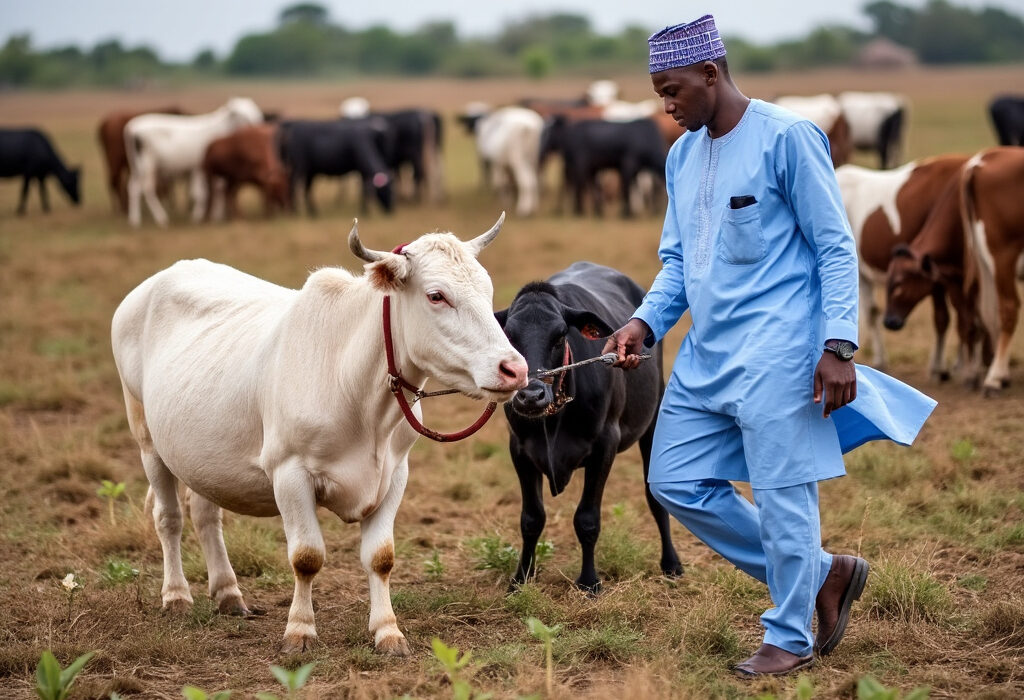
President Bola Ahmed Tinubu has underscored the importance of integrating digital technology, access to finance, and innovation to enhance the involvement of young people and women in Nigeria‘s livestock sector. He conveyed this vision at the opening of the 9th All Africa Conference on Animal Agriculture held in Abuja.
The government under Tinubu is focused on modernizing agricultural production by developing livestock value chains that support commercial ventures beyond traditional methods. This strategy aims to address food security, generate employment, and expand commercial activities within the sector.
Modernizing livestock production to create jobs
Tinubu highlighted that millions of new jobs could be created for Nigeria’s growing youth population by optimizing the livestock value chain. The Federal Government’s livestock transformation programme is central to this goal, seeking to shift from subsistence farming toward technologically driven and commercially competitive operations.
Key to this transformation is coordinated efforts to improve access to finance, foster innovation, deploy digital technologies, and establish public-private partnerships. The creation of the Federal Ministry of Livestock Development in July 2024 marks the start of a comprehensive national approach to reform the sector.
National strategies and sector reforms
The President pointed to institutional reforms guided by the Presidential Committee on Livestock Reforms aimed at enhancing governance, productivity, and peace in livestock production systems. Significant initiatives include the National Livestock Growth Acceleration Strategy, which covers improvements in productivity, value chains, animal health, commercial feed production, livestock genetics, and climate-smart practices.
Investment opportunities are particularly identified in dairy, meat processing, leather, feed milling, and livestock infrastructure—sectors where youth and women entrepreneurs could play leading roles.
Dairy sector as a focus area
Tinubu emphasized the ongoing dairy transformation programme intended to double domestic milk production to reduce Nigeria’s dependence on imports. This involves upgrading livestock breeds, improving nutrition and breeding systems, expanding private sector involvement, and developing infrastructure for milk collection and processing.
Economic impact and future outlook
Nigeria’s livestock population includes more than 58 million cattle, 64 million sheep, 124 million goats, and 660 million poultry. The sector currently contributes over $32 billion annually to the national economy. The government’s objective is to more than double this economic contribution by positioning Nigeria as a leading livestock hub in Africa.
Efforts also aim to encourage ranching and modern production methods to reduce conflicts associated with traditional livestock practices.
Beyond production, the value-chain development approach will generate opportunities across processing, logistics, animal health services, feed production, digital platforms, and agricultural technology.
Regional cooperation and innovation
Recognizing that no country can achieve sustainable livestock transformation alone, the President called for increased application of science, technology, innovation, and regional cooperation throughout Africa’s livestock industry to ensure future growth and sustainability.


0 comments
Be the first to start the conversation.