
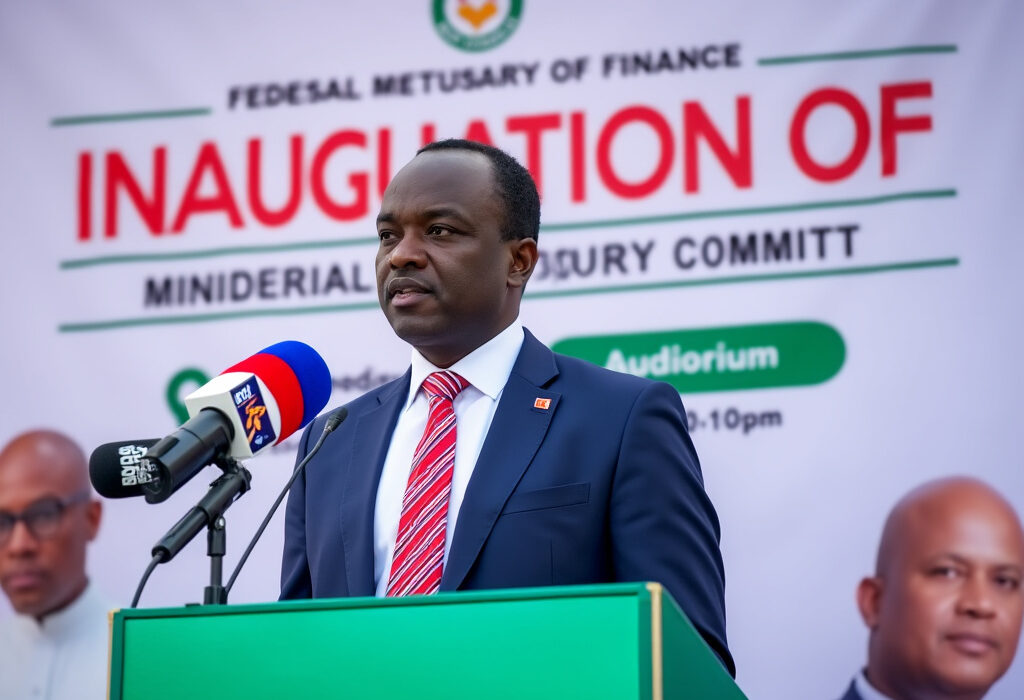
Nigeria has unveiled an ambitious portfolio of 65 projects that collectively require an investment of $78.5 billion. The announcement, made during the ongoing International Monetary Fund (IMF) and World Bank Annual Meetings in Bangkok, aligns with the Federal Government’s strategy to attract both domestic and foreign investors to accelerate economic expansion and create employment opportunities.
The portfolio was presented by Minister of Finance and Coordinating Minister of the Economy Taiwo Oyedele alongside Central Bank of Nigeria Governor Olayemi Cardoso. It spans key sectors including oil, gas and power; transport and maritime infrastructure; manufacturing; mining; agriculture; technology; healthcare; and urban services.
Sectoral Breakdown of Investment Opportunities
The projects are categorized into five major sectors: 25 projects in oil, gas and power; 17 projects in industry, manufacturing and mining; eight in transport and maritime; six in agriculture and agro-processing; and nine covering technology, health, and urban services.
Notable projects include Project Reliaxx—a crude oil evacuation and midstream infrastructure platform requiring $1.7 billion—and the Lagos Greenline Railway project with a capital need of $1.29 billion. Technology and energy-related projects such as the PELIA Flare-Gas AI Data Centre, seeking $355.6 million, and the integrated steel upgrade through the Premium Steel and Mines project valued at $1.25 billion, are also part of the portfolio.
Government Initiatives to Improve Investment Climate
To enhance investor confidence and business viability, the government has established a dedicated deal room that provides comprehensive project information, funding details, and direct access to relevant authorities. Planned reforms focus on addressing electricity pricing, transmission bottlenecks, agricultural productivity improvements, and regulatory streamlining.
Oyedele emphasized that lower inflation, decreased borrowing costs, and better coordination between fiscal and monetary policies are crucial levers for sustainable growth. He also highlighted the Economic Development Incentive, offering tax credits to qualifying companies under Nigeria’s reformed tax system, to encourage long-term productive investments.
Monetary Policy and Economic Outlook
Governor Cardoso noted the significance of reducing inflation to preserve household purchasing power, especially for low-income Nigerians. He pointed to recent monetary and structural reforms that have bolstered capital market performance and strengthened financial sector confidence.
The banking sector recapitalization exercise successfully raised about N4.6 trillion, predominantly sourced domestically. Looking ahead, Nigeria targets a 7% economic growth rate by 2027/2028, supported by increased oil production and infrastructure investments. Improved external reserves bolster resilience against global economic shocks.
Implications for Nigeria
The unveiling of this comprehensive investment portfolio signals Nigeria’s commitment to strengthening its economic fundamentals and infrastructure. With a diversified approach targeting multiple strategic sectors, the government is positioning the country to boost employment, enhance productivity and competitiveness, and ultimately achieve inclusive economic growth.
For Nigerian investors and the broader public, these developments indicate growing opportunities for participation in national development projects and potential economic benefits in the medium to long term. The effectiveness of these initiatives will depend on successful implementation, ongoing reforms, and sustained investor confidence.

0 comments
Be the first to start the conversation.