
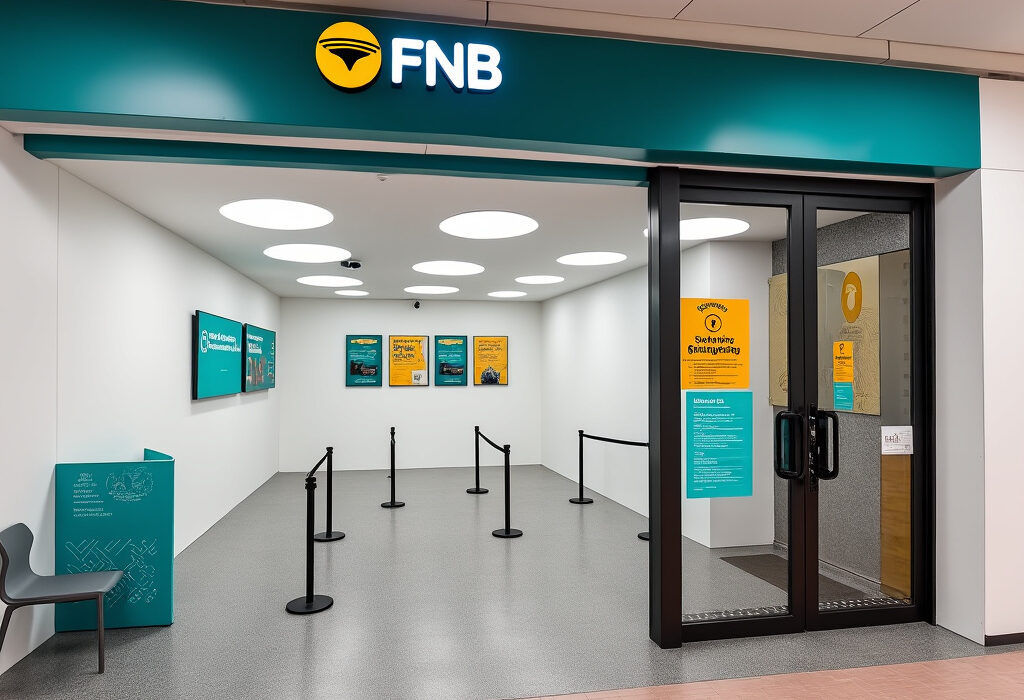
First National Bank (FNB), South Africa’s second-largest lender, has been fined R1 million (approximately $60,000) by the country’s Information Regulator for contraventions of the Protection of Personal Information Act (POPIA). The breach occurred due to a banking system error that mistakenly classified some customers as employees, granting unauthorized access to personal details of 88 home-loan applicants to 696 individuals.
The regulator found that FNB unlawfully processed personal data such as account numbers and failed to respond adequately after two complaints in 2022. Additional concerns arose from FNB’s data collection practices, including the use of newspaper reports to create databases for money laundering and politically exposed persons, which were not compliant with POPIA’s guidelines. Furthermore, the bank was criticized for retaining certain records indefinitely without proper legal justification.
This incident underlines the critical need for robust data protection protocols in African banks that handle sensitive customer information. For Nigerian and regional financial institutions, ensuring compliance with data protection laws is vital to preserve trust and avoid legal penalties.
Nigerian BNPL startup Klump shuts down after financial challenges
Meanwhile, in Nigeria, the buy-now-pay-later (BNPL) startup Klump has ceased operations after five years. Founded in 2021 by Celestine Omin and Olufunbi Falayi, Klump aimed to facilitate installment payments at e-commerce checkouts. Despite raising about $1.2 million in funding, the company faced difficulties securing sufficient capital to finance loans at scale.
Initially, Klump funded loans directly, allowing rapid credit decisions necessary for seamless online purchases. However, expanding lending operations required more capital than anticipated, and efforts to raise debt financing were unsuccessful. The company pivoted to act as a connector between shoppers, merchants, and banks, enabling borrowers to access multiple lenders. This change introduced delays and limitations, as lender onboarding and risk decisions took months or longer, slowing growth.
Klump’s closure signals challenges inherent to the BNPL business model in Nigeria and similar markets, where access to scalable lending capital is critical. The startup’s founders suggest that BNPL may be more sustainable as part of a larger financial services platform rather than standalone firms.
Implications for Nigeria and the broader African fintech ecosystem
Both developments are significant for Nigeria’s financial and tech sectors. The FNB data breach serves as a cautionary tale regarding data privacy and compliance, issues that Nigerian banks and fintech firms must prioritize amid increasing digital finance adoption.
Similarly, Klump’s shutdown demonstrates the complexities of scaling BNPL services in Nigeria, an emerging market with evolving credit infrastructure. Financial innovators seeking to empower consumer credit must address capital access and regulatory compliance to succeed.
As Nigeria’s fintech landscape evolves, these cases highlight the importance of robust risk management, regulatory adherence, and sustainable business models. They also emphasize the need for collaboration between fintech startups, traditional banks, and regulators to build trust and enhance access to credit in the Nigerian market.



0 comments
Be the first to start the conversation.