
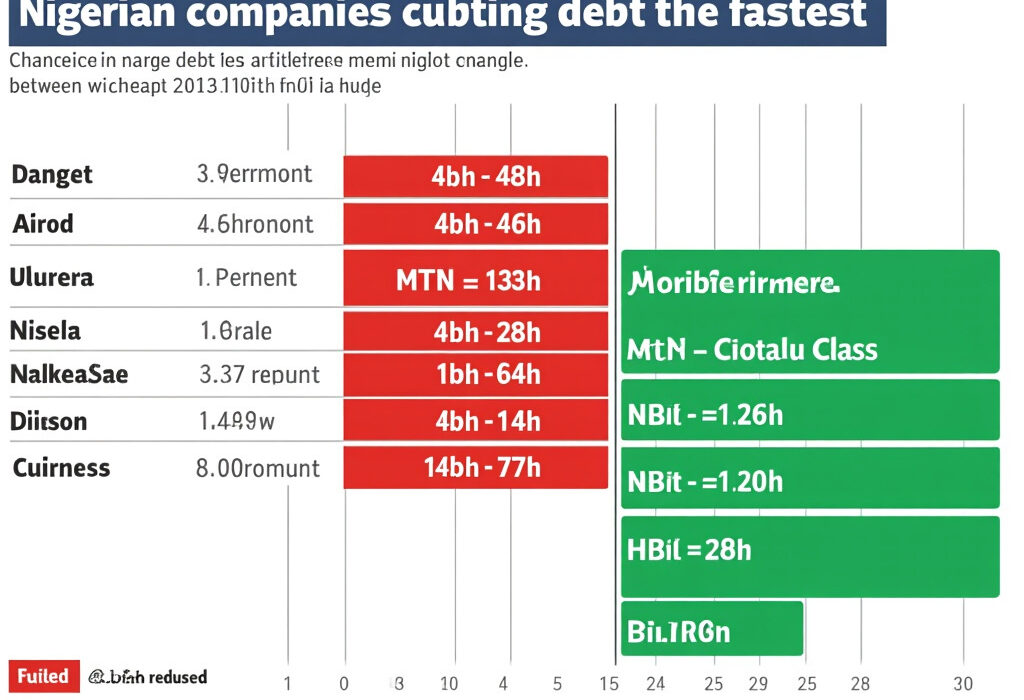
In an uncommon trend among Nigeria‘s largest corporations, seven leading non-bank companies listed on the Nigerian Exchange have collectively reduced their borrowings by approximately N2.26 trillion over the first nine months of 2026. This notable deleveraging reflects a strategic move to manage debt more sustainably in a challenging economic environment.
The reduction was most significant in sectors such as cement, oil, and telecommunications. Dangote Cement, the country’s biggest borrower, cut its debt nearly in half, repaying around N536 billion, including clearing substantial loans from its parent company and commercial paper. Nigerian Breweries fully eliminated a previous debt of N137 billion, marking a complete payoff.
Borrowing costs and lender profiles highlight corporate disparities
While some companies have decreased debt, others like BUA Cement, Julius Berger, VFD Group, and Conoil collectively increased their borrowings by about N240 billion, often to finance expansion and investments. This divide indicates varying financial strategies and access to funds among Nigerian firms.
A significant factor affecting borrowing is the wide range of interest rates. Entities able to access loans from development finance institutions or parents abroad enjoy rates between 8% and 10%, considerably lower than those relying on local banks, which charge close to 30%. This interest rate gap represents one of the clearest distinctions in Nigeria’s business financing landscape.
Currency influence and debt instruments
The strengthening naira during this period also impacted debt valuations, as dollar-denominated loans decreased in naira terms, providing exchange gains to companies like Seplat and Nestlé Nigeria. Additionally, some firms have moved away from short-term commercial paper due to its high costs, favoring longer-term or cheaper financing options from entities such as the Bank of Industry and Nigeria’s export-import bank.
For example, Fidson Healthcare transitioned from paying upwards of 23% on commercial paper to borrowing at rates between 9% and 15% from development banks, reducing its interest expenses significantly.
Implications for Nigerian businesses and economy
This debt reduction and refinancing trend may signal improved corporate financial health and a shift toward more sustainable borrowing practices, which could enhance business resilience amid economic uncertainties. However, firms depending heavily on expensive bank loans remain vulnerable to high interest burdens, limiting their growth potential.
Moreover, companies borrowing in foreign currencies face risks tied to exchange rate fluctuations, which can reverse current gains if the naira depreciates.
Overall, the evolving borrowing patterns emphasize the importance for Nigerian companies to diversify funding sources and manage debt profiles carefully, both of which have broader implications for economic stability and investment climate in the country.

0 comments
Be the first to start the conversation.